
The bathroom was clean when the tenant moved in. Now there’s mould. Does the landlord need to deal with it, or should the tenant clean it? Mould keeps coming up in our APOA groups, and this is the question we came back to this time.
What if the bathroom was clean at move-in?
Keep the entry condition report. It’s handy when you lodge a repair request, but an exhaust fan can break or a shower can start leaking after someone moves in. Consumer Affairs Victoria (CAV) says the cause matters: is something wrong with the property, or did moisture build up because the fan wasn’t used?[1]
If my tenant told me there was mould in the bathroom, I’d ask the property manager to arrange a time with them to take a look. Where are the marks? Do they keep coming back? Does the exhaust fan still work? If I manage the property myself, I’d arrange access with the tenant and get a tradesperson in if needed. In Victoria, mould linked to the building that makes the home unsafe is an urgent repair. Get the repair under way rather than waiting to agree on who pays.[1][2]
Whether you rent or own, water still collects in the shower door track and along the glass. Mould is worth paying attention to, especially if someone at home has asthma or lung disease.[4] Here are a few things you can do in the bathroom.
How I’d tackle a small surface patch
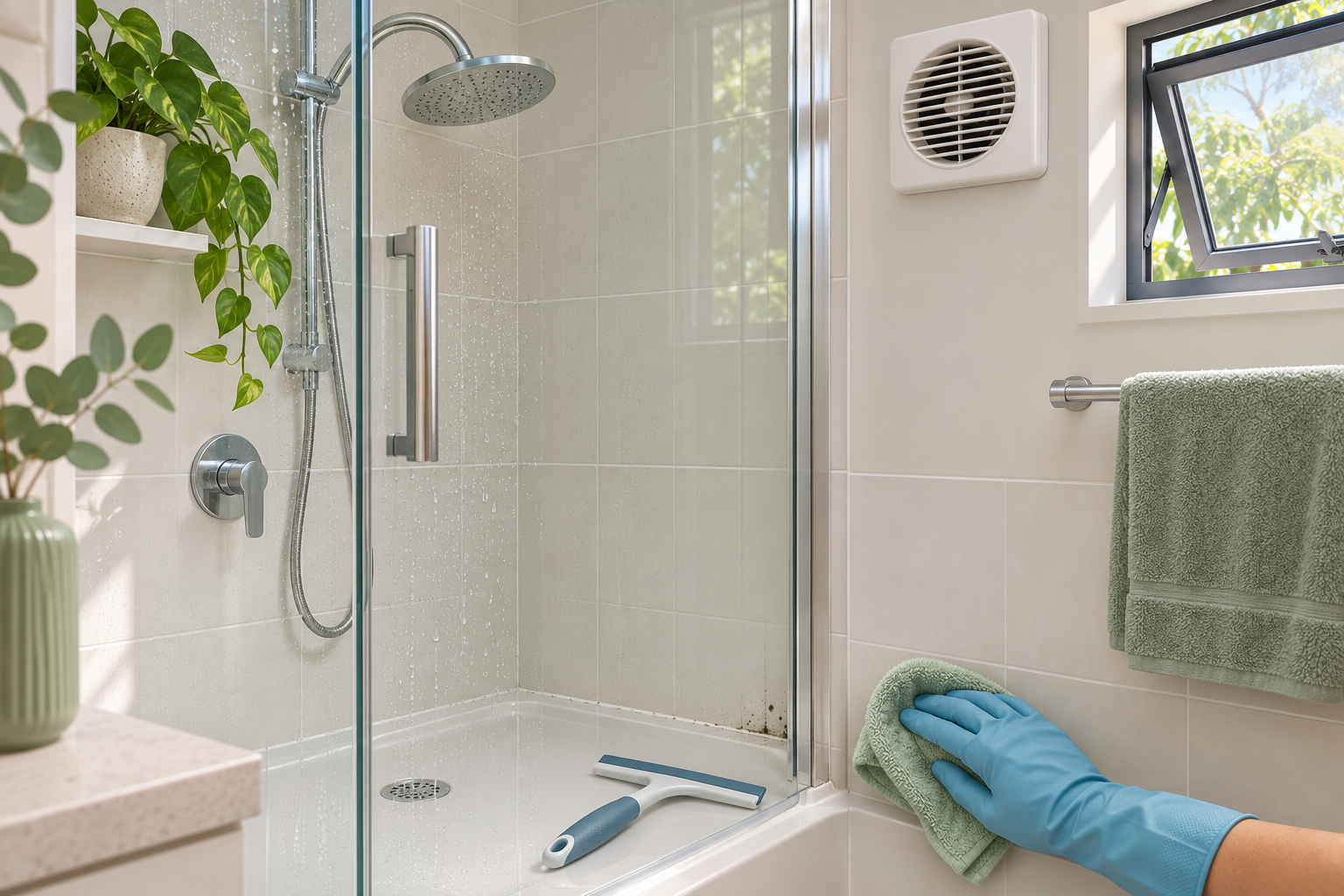
For a small patch on glass or glazed tile, get some air moving first. Run the exhaust fan and open a window if you can. Wear gloves, eye protection and a well-fitting P2/N95 mask. Keep children, pregnant people and anyone with chronic lung disease or a weakened immune system away while you clean.[3][4]
Use a household detergent that’s suitable for the surface and wipe with a damp microfibre cloth, not a dry brush. Rinse the cloth in a separate basin of clean water, clear away residue as the label directs, then dry with a fresh cloth. A cleaner that’s fine on glass might not be right for the metal trim or sealant. Never mix bleach with vinegar or other cleaning products.[3][4]
If the seal is lifting, there’s water outside the shower or the marks come straight back, put down the cleaner and get the ventilation or a possible leak checked. Get professional help for a large patch or anything you can’t clean safely.[3][4]
Give the glass a quick squeegee after a shower
Keep a squeegee handy and run it down the glass after you shower. Wipe the water out of the door track and along the seal with a dry cloth. Leave the exhaust fan going for a while after you get out so the bathroom can dry.[4]
This Bunnings video shows how to clean everyday soap scum from shower glass. For removing mould, follow the public-health guidance at the end of this article.
If the player below doesn’t load: Watch on YouTube. See also Bunnings’ guide to keeping the bathroom dry.
Quick tip: If the label allows, dampen a thin strip of kitchen paper with mould remover and press it along the intact silicone at the bottom of the shower glass. Remove it as directed on the label, and never mix mould remover with other cleaners.
Official sources and further reading
Victorian rental rules
[1] Consumer Affairs Victoria — Pests, infestations and mould
[2] Consumer Affairs Victoria — Repairs in rental properties
Victorian rental enquiries: Consumer Affairs Victoria · 1300 55 81 81
Rental rules in other states and territories
The rental discussion above concerns Victoria. For a property elsewhere, start with the guidance for the state or territory where it is located.
- NSW Fair Trading: Mould in a rental property
- Queensland RTA: Mould and minimum housing standards
- South Australia Housing Safety Authority: Whole-property minimum standards
- Western Australia Consumer Protection: Minimising mould in rental properties
- Tasmania Consumer Affairs: Rental repairs and mould
- Legal Aid ACT: Mould in rental properties
- NT Government: Repairs and maintenance in rentals (general rules)
Official advice on mould prevention and removal
These public-health guides cover ventilation, protective equipment and when to get professional help. They apply to owner-occupiers as well as renters.
[4] Australian Centre for Disease Control — Preventing mould exposure
[3] Victorian Government, Better Health Channel — Mould removal at home
Australian CDC: State and territory resources on mould
General information for ordinary Victorian residential rentals; not individual legal or professional mould-assessment advice. Sources checked 25 November 2026.