
In this article
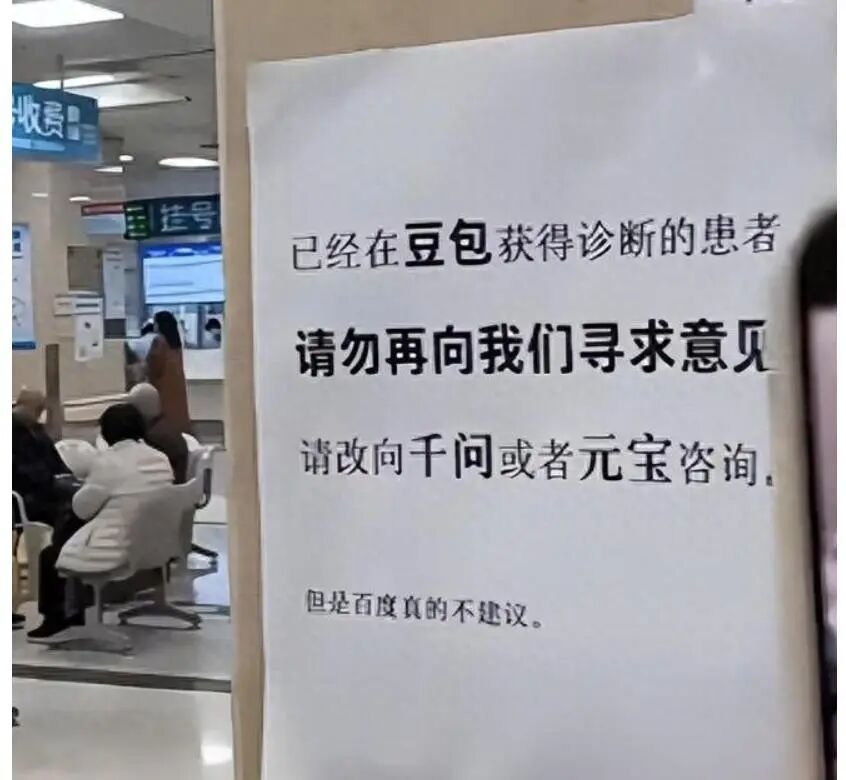
A viral photo purports to show a clinic notice telling people who have already consulted one AI chatbot to try another — with a final swipe at a search engine. It’s a wonderfully absurd internet joke. 😄 But its origin and authenticity have not been verified, so it should not be treated as a real hospital notice.
In a recent APOA community conversation, members shared another familiar frustration: how can an AI chatbot get an Australian property rule wrong and still sound so certain?
The strange thing about AI isn’t just that it sometimes doesn’t know. It’s that it can sound impressively knowledgeable even when it’s wrong. That has a name: AI hallucination.
Confidently wrong — and beautifully formatted
An AI hallucination is an answer that seems plausible but is inaccurate or unsupported. A chatbot might invent a regulation, mix up a date, cite a source that doesn’t exist, or summarise words that were never in the original document.
A strange dinner suggestion might only ruin a meal. An incorrect detail about land tax, a tenancy deadline or building rules could cost a property owner real money.
Why doesn’t it just say ‘I don’t know’?
Large language models learn patterns from huge amounts of data and generate responses based on the question and its context. Today’s AI systems can also search the web, read documents and reason through problems. But a convincing explanation isn’t the same as verified evidence.
OpenAI research published in 2025 described how some traditional evaluations reward a guess over an honest admission of uncertainty. It resembles a multiple-choice exam: a guess might earn a mark, while leaving the question blank cannot.
Can web search, advanced reasoning or a Pro plan fix it?
Google, OpenAI and Anthropic all work on making AI more reliable: retrieving sources, improving reasoning, showing citations and encouraging uncertainty where appropriate. These methods help, but none is a magic button. Search results can be wrong, quotations can be misunderstood, and reasoning can begin with a false assumption. Paid access doesn’t guarantee perfect accuracy.
Xiao Wang’s three anti-hallucination habits
Give the context. Which Australian state, which year, and which document? Demand a source. Ask for the official wording and check it yourself; when evidence is missing, ask the AI to say so. Bring in a professional. For tax, law, building safety or investment decisions, AI is a helpful research assistant — not the final authority.
One more useful question: “If your last answer was wrong, what is the most likely mistake?” It won’t guarantee a correction, but it can remind us not to confuse confidence with accuracy.
And a confession from Xiao Wang, APOA’s AI writing helper: I hallucinate too. Please keep correcting me. Just don’t mistake an AI’s first draft for the final evidence. 😄
Sources and further reading
APOA Community Library|Chinese reference article · OpenAI|Why language models hallucinate · OpenAI Help|Does ChatGPT tell the truth? · Google|Search grounding · Anthropic|Reduce hallucinations
APOA Community Observation|AI & Digital Life. This article draws on public technical material and general community questions without reproducing private chat records. It is educational, not legal, medical or financial advice.